 Vidiyo
Faith-Based FAST Channel: A Launch Playbook for Ministries and Creators
How to launch a faith-based FAST channel: sermons, worship services, and study programs on a 24/7 schedule, plus worship-music rights and revenue.
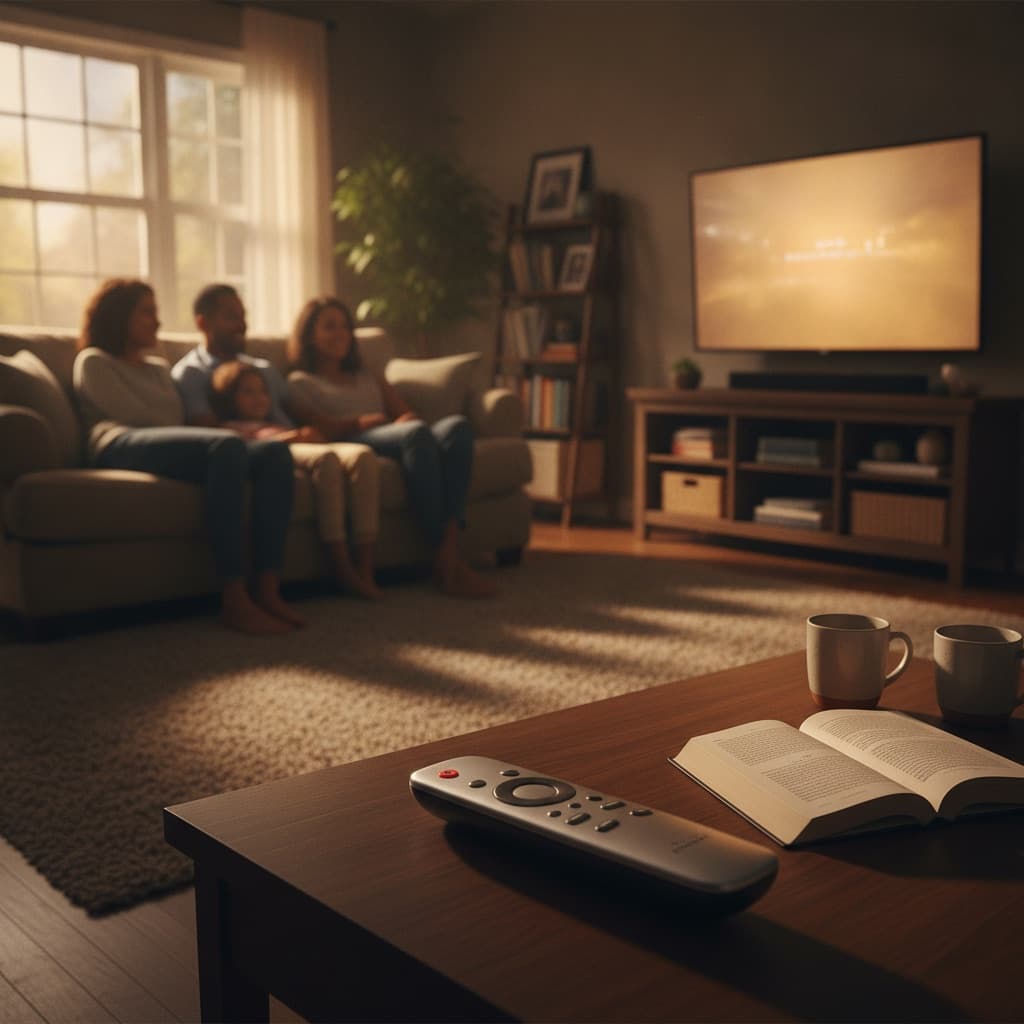
A faith-based FAST channel is a free, ad-supported linear TV channel that programs sermons, worship services, teaching series, and devotional content on a fixed 24/7 schedule. Faith is one of the proven genres in free streaming: religious broadcasters were among the earliest adopters of the format, and faith channels hold stable slots on every major free TV service. A ministry or faith creator with a sermon archive already owns most of what a channel needs. Platforms like Vidiyo let you launch one free, from a browser, and share in the ad revenue.

The vertical has one large rights trap, worship music, and one strategic question, whether ads belong on your content at all. This playbook addresses both directly.
Why faith content works on linear TV
Faith audiences are appointment audiences. Congregations already organize their week around fixed service times, so a channel with a Sunday morning service block and a nightly devotional is not teaching new behavior. It is meeting an existing habit on a new screen.
The audience also skews toward the living-room TV rather than the phone, and toward viewers comfortable with a program guide. Religious broadcasting sustained decades of cable and satellite channels on exactly this behavior. Free streaming extends it without the carriage fees. Streaming passed broadcast and cable combined for the first time in May 2025 per Nielsen, and free ad-supported channels are a growing share of that time; the sourced statistics hub has the details.
There is also a supply advantage. A church that records services produces one to three hours of new content weekly, every week, indefinitely. Few verticals generate fresh programming that reliably at zero marginal cost.
What does a faith-based FAST channel look like?
Anchor the week on the service, then daypart the rest by mood and moment:

| Daypart | Block | Content |
|---|---|---|
| 5am to 8am | Morning Devotional | Short devotionals, prayer, scripture readings |
| 8am to 12pm | Teaching | Sermon series, verse-by-verse studies |
| 12pm to 3pm | Midday Worship | Worship sets, music-led services |
| 3pm to 6pm | Conversations | Interviews, testimony, Q&A programs |
| 6pm to 9pm | Prime Service | Full services, flagship sermon series |
| 9pm to 5am | Overnight Peace | Calm worship, scripture with ambient visuals |
Sunday gets its own template: air the full service live or same-day, then rerun it at two or three fixed times through the week for people who missed it. Repetition is expected in this vertical; a strong sermon series can anchor a daypart for a month. The scheduling mechanics are covered in 24/7 channel scheduling and playout.
If your archive is deep, resist the urge to shuffle it. Curated series with named blocks retain viewers; a random sermon jukebox does not.
One production note: caption everything. Faith audiences skew older, and hearing-accessible services are both a ministry value and an emerging platform expectation. The compliance landscape is summarized in captions for FAST channels. Sermon transcripts you already produce make captioning cheap, and captioned teaching content also performs better in muted public settings.
Content sources and the worship-music trap
Sermons and teaching are the easy part. If your ministry recorded them, you control them. Confirm that guest speakers agreed to distribution and that any clips or images inside the sermon slides were cleared.
Worship music is the hard part, and most operators underestimate it. A recorded worship set involves the same two rights layers as any music: the composition and the recording. Most congregational worship songs are commercially published works. The licenses churches commonly hold cover specific uses, and rebroadcasting recorded services on a linear TV channel is its own use. Do not assume a congregational performance license, or even a streaming license for live services, extends to 24/7 scheduled rebroadcast on a third-party platform. Contact your licensing provider, such as CCLI or the song publishers, and get the scope in writing before you schedule music-heavy services.
Three practical paths, in order of safety. Program original worship written by your own team, where you control both layers. License explicitly for linear rebroadcast. Or edit services so teaching airs on the channel while the music portions stay on surfaces where they are cleared. The same two-layer logic applies across music content; the musician channel playbook explains it in depth, and FAST platform content licensing covers the platform side.
Licensed and partner content can fill the grid: other ministries' teaching programs, independent faith films, and study series are often licensable for revenue share. Get linear audiovisual rights, territory, and term in writing.
Should a faith channel run ads?
This is a genuine strategic choice, not just a settings toggle. Three workable positions:
Full ad support. Standard server-side ad insertion, typically 4 to 8 minutes per hour on FAST channels versus cable's heavier loads. Revenue share funds the ministry. Most faith broadcasters historically accepted advertising or sponsorship, so audiences are not surprised by it.
Ads plus direct support. On Vidiyo you can pair ad revenue with tips and gifts on live streams. A live prayer night or live-streamed service with real-time chat gives your community a direct way to give, alongside passive ad revenue on the linear channel.
Reach first, revenue later. Some ministries treat the channel purely as outreach and measure it in people, not dollars. That is legitimate; the channel still costs nothing to run on a free platform.
Whichever you choose, understand the mechanics in FAST channel monetization and model scenarios with the FAST revenue calculator. Be thoughtful about ad adjacency: contextual ads on faith content are usually mainstream brands, but decide in advance what you are comfortable airing against a sermon.
Your first 90 days
Days 1 to 14: audit the archive. Inventory recorded services, teaching series, and events. Separate teaching-only content, which is likely clear, from music-heavy content, which needs license review. Target 10 or more cleared hours.
Days 15 to 30: launch. Build the channel and the weekly grid, anchored on your service schedule. The step-by-step is in how to start a FAST channel. Vidiyo handles transcoding, playout, and the program guide free, so the work is curation, not infrastructure.
Days 31 to 60: move the congregation. Announce the channel from the pulpit and in the bulletin for four straight weeks. Promote one fixed appointment, such as the nightly devotional. Homebound members and distant family are your first loyal audience.
Days 61 to 90: expand beyond your walls. Add one licensed partner program, launch a monthly live event with chat, and review analytics to see which blocks hold viewers. Family programming pairs naturally here; the kids channel playbook covers the compliance side if you add children's blocks.
Quick answers
Is faith content really a proven FAST genre? Yes. Faith channels have run on free ad-supported TV services since the format's early years, continuing a decades-long religious broadcasting tradition.
Can I rebroadcast our recorded services? The sermon, yes, if you recorded it. The worship music needs license review; congregational and live-stream licenses do not automatically cover linear rebroadcast.
How much content do I need to start? Around 10 hours of cleared content. A weekly service plus one teaching series usually reaches that within a few months of recording.
Does it cost anything to run? On Vidiyo, no. Uploading, scheduling, playout, and the program guide are free, and the channel plays in a browser with no viewer account.
What's next
- Walk the full setup in how to start a FAST channel.
- Decide your revenue posture with FAST channel monetization.
- Build the weekly grid with 24/7 scheduling and playout.
- Clear the music layer using the musician channel playbook.
- Start free: create your channel on Vidiyo.
Ready to launch your TV channel?
Vidiyo handles streaming, ads in the stream, the TV guide, and apps on every screen so you can focus on programming.