 Vidiyo
What Is CTV? Connected TV, Explained Simply
What is CTV? Connected TV is any television that streams video over the internet. Learn how CTV differs from smart TV and OTT, and why advertisers use it.

CTV, short for connected TV, is any television that connects to the internet and plays streaming video through apps. The category includes smart TVs with built-in app stores and ordinary TVs paired with a streaming device such as a Roku player, Fire TV stick, Apple TV box, or game console. In advertising, CTV means video ads delivered on that living-room screen through streaming apps rather than through cable or broadcast.
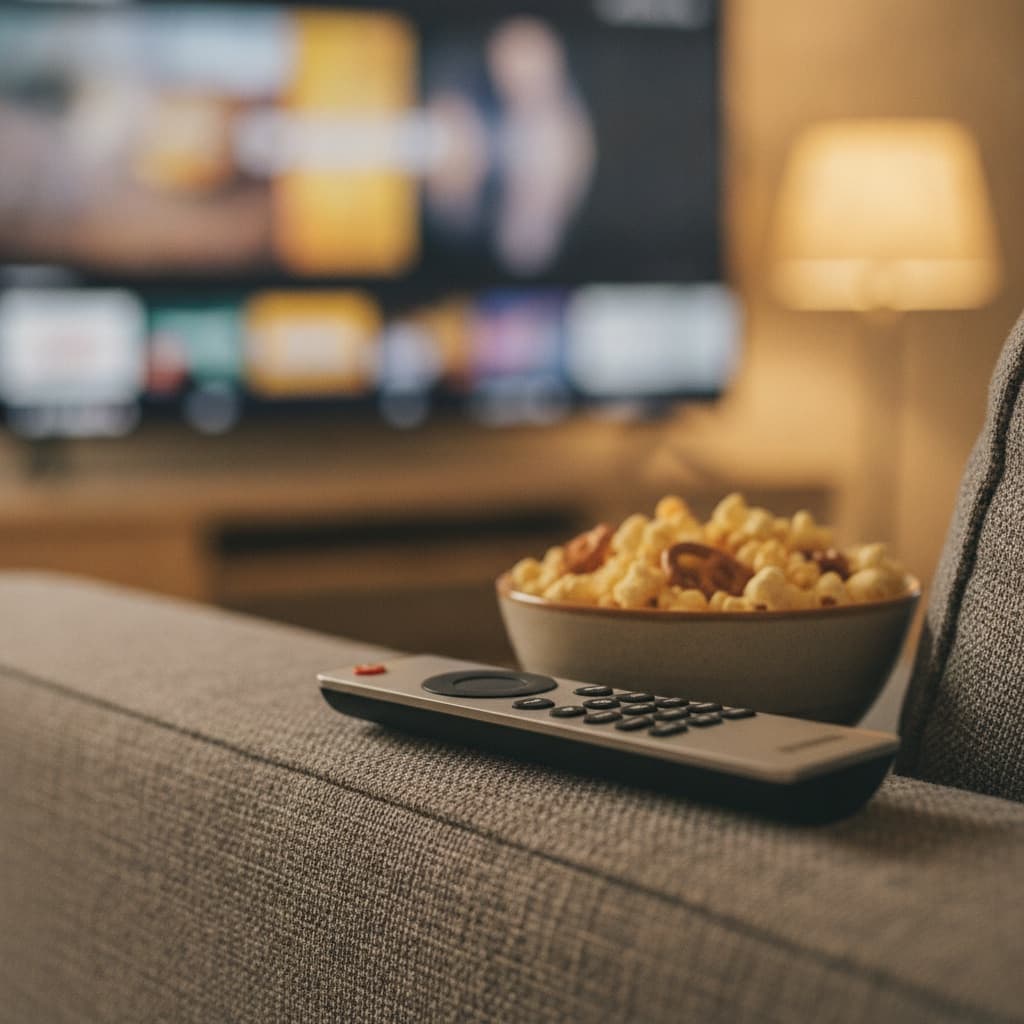
The term matters because the money moved. US advertisers spent $33.35 billion on CTV ads in 2025, and eMarketer projects roughly 14 percent growth in 2026. This guide defines CTV precisely, separates it from smart TV and OTT, and shows where free streaming channels fit.
What counts as a connected TV?
A television becomes a connected TV the moment it can run streaming apps on its screen. That happens in four common ways:
- Smart TVs. Sets from Samsung, LG, Vizio, Hisense, and TCL ship with an operating system and app store built in.
- Streaming sticks and boxes. Roku, Amazon Fire TV, Apple TV, and Google TV devices turn any HDMI-equipped set into a CTV.
- Game consoles. PlayStation and Xbox run the major streaming apps.
- Hybrid set-top boxes. Some cable and telco boxes now bundle streaming apps beside their channel lineup.
The screen is the defining trait. A phone streaming a show is not CTV. The same stream on a Roku-connected TV is. Measurement firms and ad buyers draw the line at the television because viewing behavior, ad formats, and prices all change there.
CTV vs smart TV vs OTT: what's the difference?
People swap these three terms constantly, but they name different things. One names a device category, one names a hardware type, and one names a delivery method.

| Term | What it names | Scope |
|---|---|---|
| CTV (connected TV) | A TV screen playing internet-delivered video | Device category: smart TVs, sticks, boxes, consoles |
| Smart TV | A television with an OS and apps built into the set | Hardware subset of CTV |
| OTT (over-the-top) | Video delivered over the open internet, on any screen | Delivery method: TVs, phones, tablets, laptops |
A smart TV is always a CTV. A CTV is not always a smart TV, because a basic panel with a Fire TV stick still qualifies. OTT is the broadest term: it describes how the video travels, not where it lands. A streaming app on your phone is OTT but not CTV. The same app on your Roku is both. For a full breakdown of that pair, read OTT vs CTV.
Why do advertisers say CTV?
Advertisers adopted the term because the TV screen changes what an ad is worth. Four things separate CTV inventory from mobile or desktop video:
- Full attention. Ads run full screen with sound on, and most CTV ads cannot be skipped.
- Shared viewing. A living-room TV often has more than one person in front of it, so one impression can reach a household.
- Digital targeting on a TV budget. Buyers get programmatic delivery, frequency caps, and measurable outcomes that broadcast never offered.
- Lean-back context. CTV ads run inside long-form shows and live channels, not between short clips in a feed.
So "CTV advertising" is shorthand for a specific promise: television-quality attention bought with internet-style precision. That combination is why budgets keep shifting from cable to streaming apps.
How big is the CTV market?
Large, and still growing. Streaming took a record 47.5 percent of US TV viewing in December 2025, per Nielsen's The Gauge. Pay TV keeps shrinking underneath it: only 36 percent of US adults still subscribe to cable or satellite, and just 16 percent of adults under 30 do (Pew Research, 2025).
Free channels are a big share of the activity. eMarketer counts 131.4 million US viewers of free ad-supported streaming in 2026, which is 54 percent of all connected-TV users. Every market number above, with its source, lives in our FAST industry statistics hub.
Where do FAST channels fit in?
FAST channels are free, ad-supported linear channels that live inside CTV apps. Learn the model in full at what is FAST TV. Watching one feels like linear TV: you pick a channel, it is already playing, and ads pay for it. Pluto TV, The Roku Channel, and Tubi together took 5.7 percent of all US TV viewing in May 2025, more than any single broadcast network (Nielsen).
The barrier to running one of these channels has collapsed. On Vidiyo, anyone can launch a 24/7 channel for free: upload videos, schedule them, and the platform handles transcoding, playout, ad insertion, and the program guide. Channels play in a web browser with no account required, plus apps on Roku, Fire TV, Apple TV, iOS, and Android. When the acronyms pile up, keep the FAST TV glossary open.
Quick answers
Is a smart TV the same as CTV? Not exactly. A smart TV is one kind of connected TV. A regular TV with a Roku stick or a game console attached also counts as CTV.
Is YouTube on a TV screen considered CTV? Yes. TV sets are YouTube's number one device in the US, and YouTube took a record 12.5 percent of all US TV viewing in May 2025 (Nielsen).
Does CTV include phones and laptops? No. Streaming on a phone or laptop is OTT video, but CTV refers only to viewing on a television screen.
Why do CTV ads cost more than mobile video ads? The big screen delivers full attention, shared household reach, and high completion rates. Programmatic FAST CPM benchmarks cluster around $15 to $25, though those are vendor benchmarks rather than audited measurement.
What's next
Ready to launch your TV channel?
Vidiyo handles streaming, ads in the stream, the TV guide, and apps on every screen so you can focus on programming.