 Vidiyo
Vidiyo vs Amagi: Head-to-Head FAST Comparison
Vidiyo vs Amagi head-to-head: pricing, distribution, SSAI, time to launch, and which FAST platform fits your channel stage and budget today.
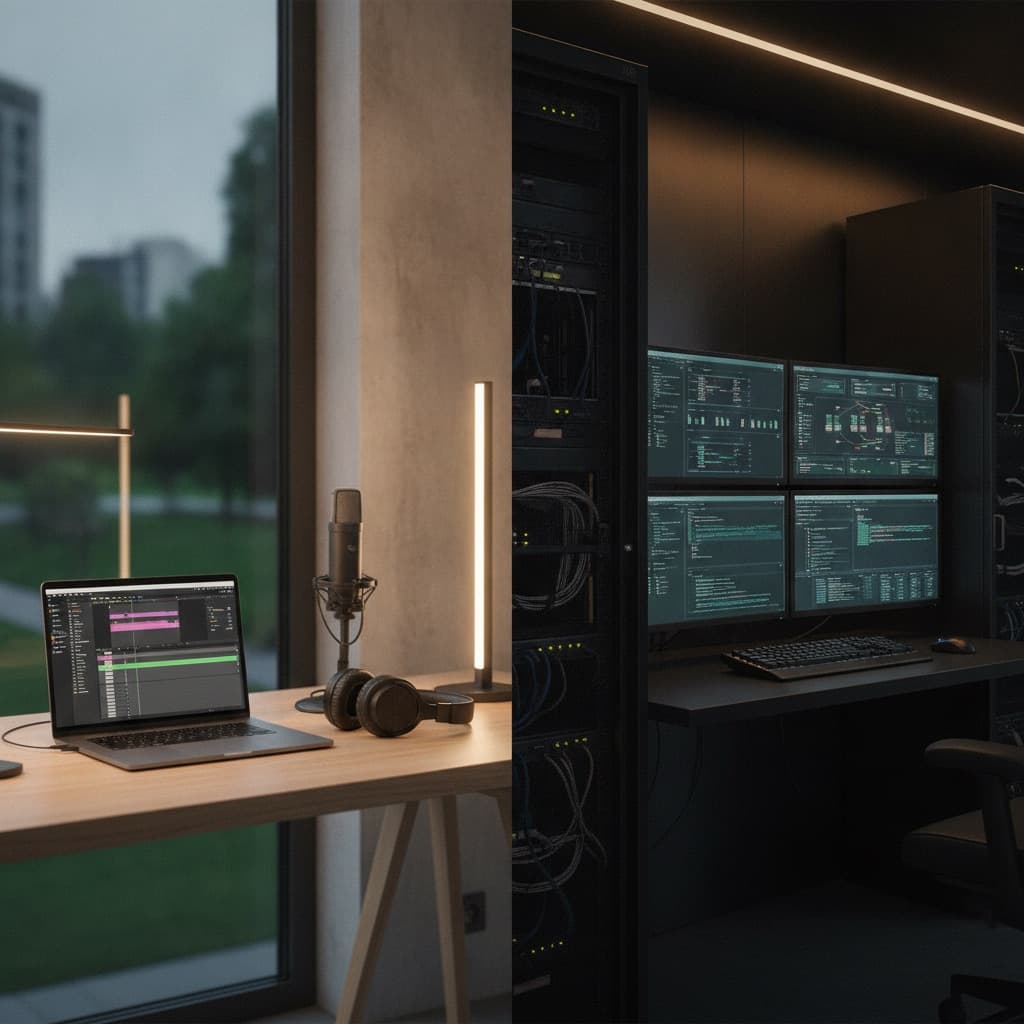
Vidiyo and Amagi sit at opposite ends of the FAST platform market. Vidiyo is free and built for independent operators. Amagi is enterprise-priced and built for media companies. This page is the head-to-head only.
For a budget-tier list of other options, see Amagi alternatives. For free-tier economics, see free FAST channel platforms. For the wider market map, see best FAST channel platforms 2026.
Quick answers
Is Vidiyo cheaper than Amagi? Yes for launch cost. Vidiyo is free with revenue share. Amagi is typically enterprise and quote-based.
Does Amagi put me on Samsung TV Plus? Often yes under the right contract. That is a core enterprise differentiator vs aggregator-app distribution.
Can I start on Vidiyo and move to Amagi later? Yes. Keep your files and programming plan. Plan for weeks of onboarding when you switch.
Where do I see other options by budget? Amagi alternatives and best FAST platforms 2026.
When does Amagi usually make economic sense? When monthly FAST ad revenue and multi-channel needs clearly exceed quote-based fees, often discussed in the $10,000-$30,000/month range depending on ops.
At a glance
| Vidiyo | Amagi | |
|---|---|---|
| Price | Free (revenue share) | Typically enterprise / quote-based (~$2,000-$50,000+/month reported) |
| Target user | Independent operators, creators | Enterprise media companies |
| Self-serve | Yes | No (sales process) |
| Time to launch | Hours | Weeks |
| Required minimum commitment | None | Contract |
What they share
Both platforms handle the core FAST channel stack:
- 24/7 HLS playout from scheduled content
- SSAI (server-side ad insertion)
- EPG generation (XMLTV)
- Multi-platform distribution
- Analytics
For a single channel, the underlying delivery is comparable. An HLS stream from either platform can reach a Roku viewer. The viewer experience of watching your channel is the same.
Where Amagi is stronger
Enterprise distribution relationships. Amagi has direct, negotiated relationships with major FAST outlets: Samsung TV Plus, LG Channels, Vizio WatchFree+, Pluto TV, Tubi, and many more globally. Your channel can appear as a standalone listing on those platforms, not only inside an aggregator app.
Multi-channel operations. CLOUDPORT is built for operators running 10+ channels. Workflow, automation, and ops tooling match that scale.
Deeper analytics. Amagi's analytics go further on audience and monetization than most smaller platforms.
SLAs and support. Enterprise SLAs, dedicated technical support, and account management. When a stream fails overnight, a team is on call.
Content operations at volume. CLOUDSTREAM handles ingest, processing, and QC for operators moving hundreds of hours of new content per week.
Where Vidiyo holds its own
Price. Free to launch. For operators building audience without a tech budget, that removes the fixed monthly floor.
Time to launch. Vidiyo takes hours. Amagi onboarding and negotiation take weeks.
Single-channel focus. For one to three channels, Vidiyo's UI stays simpler than enterprise ops tooling.
Revenue share. No fixed monthly platform fee. You pay in proportion to earnings. On a small channel, a fixed Amagi fee can erase the whole revenue line.
Distribution: the real comparison
Vidiyo: Your channel lives inside the Vidiyo app on Roku, Fire TV, Apple TV, web, iOS, and Android. Viewers find you by browsing Vidiyo. You are not independently listed in the Roku Channel Store as a standalone app under your brand.
Amagi: Amagi can place your channel directly on Samsung TV Plus, LG Channels, Vizio WatchFree+, Pluto TV, and Tubi as a branded channel. Viewers can find you inside those platforms' own guides.
For many independents, the Vidiyo app path is enough while you grow. For channels that need native Samsung TV discoverability, Amagi's relationships matter. Carriage process detail sits in guides like how to get on Samsung TV Plus.
Monetization differences
Vidiyo: Revenue share. Vidiyo monetizes platform inventory and shares per-channel earnings. You do not run a full private ad sales desk on day one.
Amagi (THUNDERSTORM): Heavier ad ops. You can bring your own ad server (Google Ad Manager, FreeWheel), set private marketplace deals, and use Amagi's sales relationships. Better fit when you sell premium direct inventory.
Practical gap: At about $500/month in ad revenue, Amagi's fee usually dwarfs the upside of a fancier ad stack. At about $20,000/month, bring-your-own demand and deeper ops can pay off. Model scenarios with the FAST revenue calculator.
Migration path
Operators who start on Vidiyo and later move to Amagi-scale do not need to rebuild the library from zero:
- Content files stay yours
- Programming strategy migrates; the schedule logic is yours
- Audience follows your promotion, not the hosting brand
The real costs are onboarding time (often weeks) and a short window where the channel may be split across systems.
Decision framework
Start on Vidiyo if:
- You are launching your first FAST channel
- Monthly channel revenue is under about $5,000
- You do not need branded OEM app distribution yet
- You want to validate content and audience before committing budget
Consider Amagi if:
- Monthly FAST ad revenue exceeds about $10,000-$20,000
- You manage 5+ channels
- You need direct Samsung TV Plus / LG Channels placement
- You need enterprise SLAs and dedicated support
- You are a broadcaster with ops staff already in place
The crossover often lands between about $10,000 and $30,000/month in ad revenue, depending on channel count and how much the extra distribution is worth to you.
Ready to launch? Follow how to start a FAST channel. YouTubers can also start at /for/youtubers. Market context: FAST industry statistics.
Ops and staffing differences
The product comparison is incomplete without staffing.
Vidiyo: Self-serve. One operator can upload, schedule, and monitor a small slate. Support is documentation and product tooling, not a dedicated on-call engineer assigned to your account.
Amagi: Built for teams. Expect account management, technical onboarding, and reporting rituals that assume broadcast-style ops. That is a feature when you have staff. It is overhead when you do not.
If your "team" is one founder and a freelancer, enterprise process cost is real even before the invoice.
Questions to ask in an Amagi sales process
- Which platforms are guaranteed under this quote, and what does placement look like for my channel?
- What is the minimum term and total cash cost over that term?
- Which SLA covers overnight incidents, and what is the response time?
- How does SSAI work if I bring Google Ad Manager or FreeWheel?
- What does migration from my current playout look like week by week?
- What reporting do I get by platform for hours, fill, and CPM?
Write the answers down. Vague "distribution included" language is not enough. Broader budget options: Amagi alternatives.
A staged path most independents should use
- Launch free on Vidiyo and stabilize a 7-day schedule.
- Collect 30 to 90 days of viewing hours, session length, and top titles.
- Model incremental OEM revenue with the FAST revenue calculator using conservative CPM bands from FAST CPM benchmarks 2026.
- If mid-market OEM doors are enough, evaluate Frequency before enterprise quotes.
- Open Amagi when multi-channel ops and direct placements clearly pay for themselves.
That path avoids paying enterprise prices for an unproven library.
Related comparisons
Try Vidiyo free. No commitment.
Launch in under 10 minutes. Streaming, ads in the stream, the TV guide, and apps on every screen are included at no cost.
Start creating, free