 Vidiyo
The Monetization Stack: How FAST Operators Are Actually Making Money
A practical breakdown of every revenue layer available to independent FAST channel operators: programmatic, direct sales, revenue share, and what the numbers actually look like at different scales.
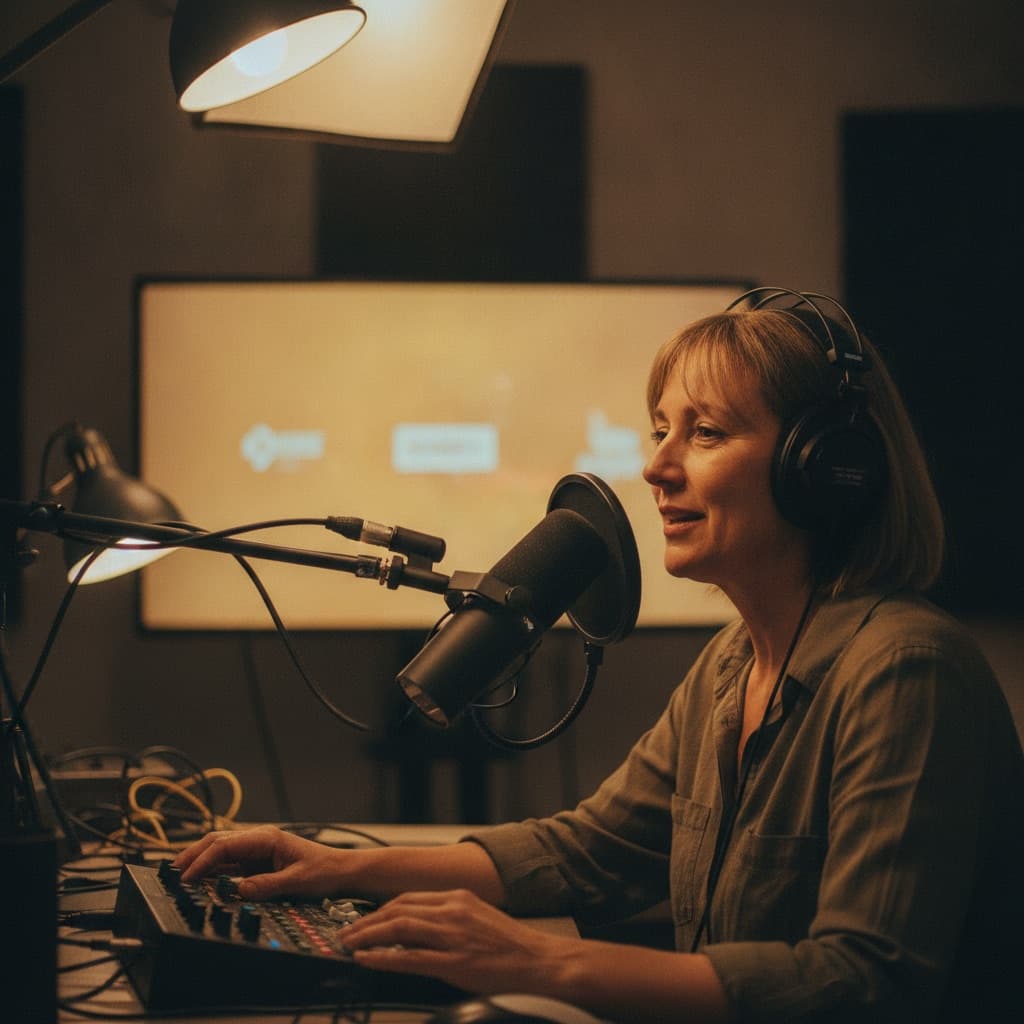
The FAST channel monetization conversation often gets stuck at "you make money from ads." That's technically true and almost useless as a starting point. This episode breaks down every layer of the monetization stack, what the actual numbers look like, and where independent operators are leaving money on the table.
The baseline: what programmatic actually pays
If you launch a FAST channel today and plug into a programmatic demand stack through your playout platform, here's what you'll see:
CPMs by category (US, Q1 2025 averages):
- News/current events: $8–$18
- Sports: $10–$22
- Food and cooking: $5–$12
- General entertainment: $3–$8
- Classic film: $2–$6
- Kids/family: $3–$7 (with compliance constraints)
- Documentary: $6–$14
- Health and wellness: $5–$11
These are average programmatic CPMs. The spread within each category is enormous. A food channel with verified demographic data and strong completion rates can command double the rate of a channel with the same content but weaker signals.
The three things that move programmatic CPMs up most reliably:
Verified audience demographics. Advertisers buying CTV inventory programmatically are bidding on audience signals, not content categories. A channel with strong first-party data about its audience (age, gender, household income, location) commands meaningfully higher CPMs than a channel that's a black box to the DSP. Every legitimate CTV SSP has mechanisms for passing audience data alongside inventory.
Completion rates. CTV completion rates are already higher than any other digital format. Advertisers expect it. But there's variance. A channel with 95% completion rates on 30-second spots commands a premium over one with 85%. Your playout platform's ability to deliver smooth, uninterrupted playback is a direct factor in your CPMs.
Content safety signals. Brand safety is increasingly automated and increasingly important. Content that can be accurately categorized as brand-safe (no violent news, no controversial topics) gets higher bid prices. Content that can't be categorized, or that creates brand-risk signals, gets bid suppression or no bids at all.
Ad load: the lever most operators under-optimize
Standard FAST ad load is 4–5 minutes of advertising per 30-minute programming block, which is about 13–17% of total airtime. This is dramatically less than linear cable (typically 18–22 minutes per hour) but what the market has converged on as FAST-standard.
Most independent operators launch with whatever default ad break cadence their playout platform configures and never revisit it. This is a significant revenue mistake.
Ad pod composition matters more than raw ad load. A single 90-second pod of three 30-second spots often outperforms three separate 30-second single-spot breaks in terms of completion rates and fill rates. Grouped pods are easier for demand-side systems to fill optimally. Fragmented single-spot breaks can have lower fill rates because the gap between ad request and response time has to fit inside a window that wasn't designed for it.
Break timing affects both completion and revenue. Ad breaks placed immediately after natural content pauses (end of a segment, post-credit moment, natural story resolution) have higher completion rates than breaks inserted mid-sentence or mid-scene. This sounds obvious but many FAST operators using automated commercial placement are generating breaks algorithmically without content-awareness.
The fill rate problem. Most independent FAST channels have programmatic fill rates well below 100%. A channel generating 1,000 ad opportunities per day with 60% fill is leaving 400 ad slots empty. The fix isn't always "get more demand sources." Sometimes it's better audience signaling, better break pod structure, or fixing VAST response handling in the playout stack.
The revenue share structure
Most FAST platforms that distribute channels to viewers take a revenue share rather than charging flat fees. Understanding this structure matters because it directly affects how you should think about distribution strategy.
Platform revenue share models (typical ranges):
- Pluto TV: ~50% to the channel (varies by deal tier)
- Samsung TV Plus: ~50–60% to the channel
- Amazon Freevee (folded into Prime Video): varies by deal structure
- Roku Channel: ~50–60% to the channel
- Tubi: typically not a direct rev share channel (Tubi owns and programs its own channels, separate from the network model)
These numbers are not published and vary based on channel category, exclusivity, and negotiating leverage. A channel bringing a large existing audience to a platform is in a different negotiating position than an unknown operator.
What this means practically: if you're on five platforms and each takes 50%, your effective CPM after revenue share is half of whatever programmatic is paying. A $10 CPM becomes $5. At scale, the question of which platforms you prioritize, and whether you can negotiate better terms, matters significantly.
Direct advertising: the path to real margins
Programmatic advertising is a commodity market by design. Direct advertising is where independent FAST operators can build real competitive advantage.
Direct advertising on FAST takes a few forms:
Sponsorships. A brand pays a flat fee to be the exclusive sponsor of a specific show or daypart. "This episode of [show] is brought to you by [brand]." Flat fee deals eliminate the programmatic volatility and often come with significantly higher effective CPMs. A $5,000/month sponsorship for a show with 100,000 monthly viewers at 2 minutes of ad time is roughly a $25 CPM, double what most programmatic channels see.
Branded content. The channel produces content in partnership with a brand. More production work but potentially much higher fees and longer contract terms. Usually only viable for channels with established audiences and some editorial credibility.
Host-read or integrated ads. More common in podcast-origin channels but growing in FAST. An editorial host or narrator does a contextual read for a brand. Higher engagement than standard spots, commands a premium.
Direct-sold pre-roll. For channels with sufficient scale, selling pre-roll video inventory directly to brands or agencies bypasses the programmatic stack entirely. Requires a sales capability (or relationship) but can generate 3–5x programmatic rates on the same inventory.
Most independent FAST operators are not doing any direct advertising in the first 12–18 months. This is understandable. Direct ad sales requires either a sales team, strong inbound brand interest, or a very specific niche with obvious advertiser demand. But building toward direct revenue should be a stated goal from the start.
Channel licensing as a revenue stream
This is underutilized and underappreciated: your channel can itself be a licensed asset.
Once you've built a channel with an established brand, schedule, EPG metadata, and a content library, other platforms can license that package rather than build their own. This happens in two directions:
Licensing to aggregators. Platform-specific FAST bundles want programmed channels, not just content libraries. A well-programmed 24/7 channel in a specific niche is more valuable to an aggregator than raw content it has to program itself. Some platforms pay flat licensing fees for this.
White-labeling for brands. Brands in some categories want branded streaming channels: a fitness brand wants a fitness channel, a food brand wants a cooking channel. Building a channel for a brand on a fee-for-service basis is a different business model than running an ad-supported channel, but it's one that's growing as brands explore CTV as an owned media channel.
Neither of these is a "launch" revenue strategy, but they're worth keeping in mind as the channel matures.
Merchandise, events, and the long game
FAST channels with genuine audiences eventually open up ancillary revenue streams that have nothing to do with advertising:
Merchandise. Documentary and editorial channels in particular can build enough brand equity to sell merchandise. This is niche but real. A few creator-origin FAST channels have launched product lines tied to their channel brand.
Live events and premium content. Some FAST operators are experimenting with hybrid models: a free ad-supported channel that promotes paid live events (concerts, sporting events, conferences). The FAST channel is the audience-development engine; the live event is the premium revenue product.
Subscription tiers. This is controversial because it feels like it contradicts the FAST value proposition, but some operators are running hybrid ad-supported/subscription models where the FAST channel is the top of funnel and premium content lives behind a paywall.
None of these are relevant until you have meaningful audience scale. But the pattern is consistent: the most financially durable FAST operations are the ones where the channel is not just an ad delivery mechanism but a media brand.
What the unit economics actually look like
A realistic P&L for a mid-tier independent FAST channel in 2025-2026:
Channel profile:
- 5,000 average concurrent viewers
- 4 ad breaks per 30-minute block (8 per hour)
- 2 x 30-second spots per break
- 70% fill rate
- $6 average CPM
- 24/7 operation
Monthly ad impressions: 5,000 viewers × 24 hours × 60 breaks/hour × 70% fill × 1 impression/break ≈ 5.04M impressions
Gross revenue: 5.04M / 1,000 × $6 = ~$30,240/month
After 50% platform rev share: ~$15,120/month
Operating costs:
- Playout infrastructure: $200–$500/month (on Vidiyo, $0)
- Content licensing: $2,000–$5,000/month (varies enormously)
- EPG metadata: $100–$300/month
- Personnel: highly variable
At Vidiyo's $0 infrastructure cost, the economics are substantially better than running your own playout stack. But the content cost is the real variable. A channel with a paid content library has materially different economics than one using owned or free content.
The point isn't the specific numbers. Your numbers will be different. The point is that FAST channel economics are calculable, not mysterious. Model your unit economics before launch and you'll know what fill rates, CPMs, and viewer counts you need to break even.
What most operators get wrong
Chasing platform count over platform quality. Being on 10 platforms with an average CPM of $2 is worse than being on 3 platforms with an average CPM of $8. Programmatic demand quality varies enormously by platform. Your first priority should be platforms with strong programmatic demand and verified audience demographics, not maximum distribution breadth.
Ignoring fill rates. Most operators look at CPM but not fill rate. A 90% fill rate at $6 CPM generates 10% more revenue than a 80% fill rate at $6.50 CPM. Understanding your VAST error logs and fixing fill rate issues is often more immediately valuable than optimizing CPMs.
Not investing in audience data. First-party audience data is increasingly the asset that separates high-CPM inventory from average. Even basic demographic data about your audience, collected through registration flows, app data, or platform partnerships, is worth capturing and passing to your SSP.
Treating programmatic as permanent. Programmatic revenue is real but volatile. eCPMs fluctuate with macro advertising cycles, platform policy changes, and market conditions. Operators who've built toward direct advertising relationships have more predictable revenue than those entirely dependent on programmatic.
The FAST monetization opportunity is real. But it's layered, and the operators doing well have thought carefully about each layer. Start with programmatic, invest in audience data quality, build toward direct deals, and keep an eye on the ancillary revenue streams as your audience grows.
Next episode, we'll get into distribution strategy: navigating the platform landscape, understanding what different distribution partners actually offer, and how to sequence your platform rollout.
If you're building a FAST channel and want to compare notes on monetization strategy, reach out at signal@vidiyo.com.
The Vidiyo team
Ready to launch your FAST channel?
Streaming, ads in the stream, the TV guide, and apps on every screen are included in Vidiyo at no cost.
Start creating, free